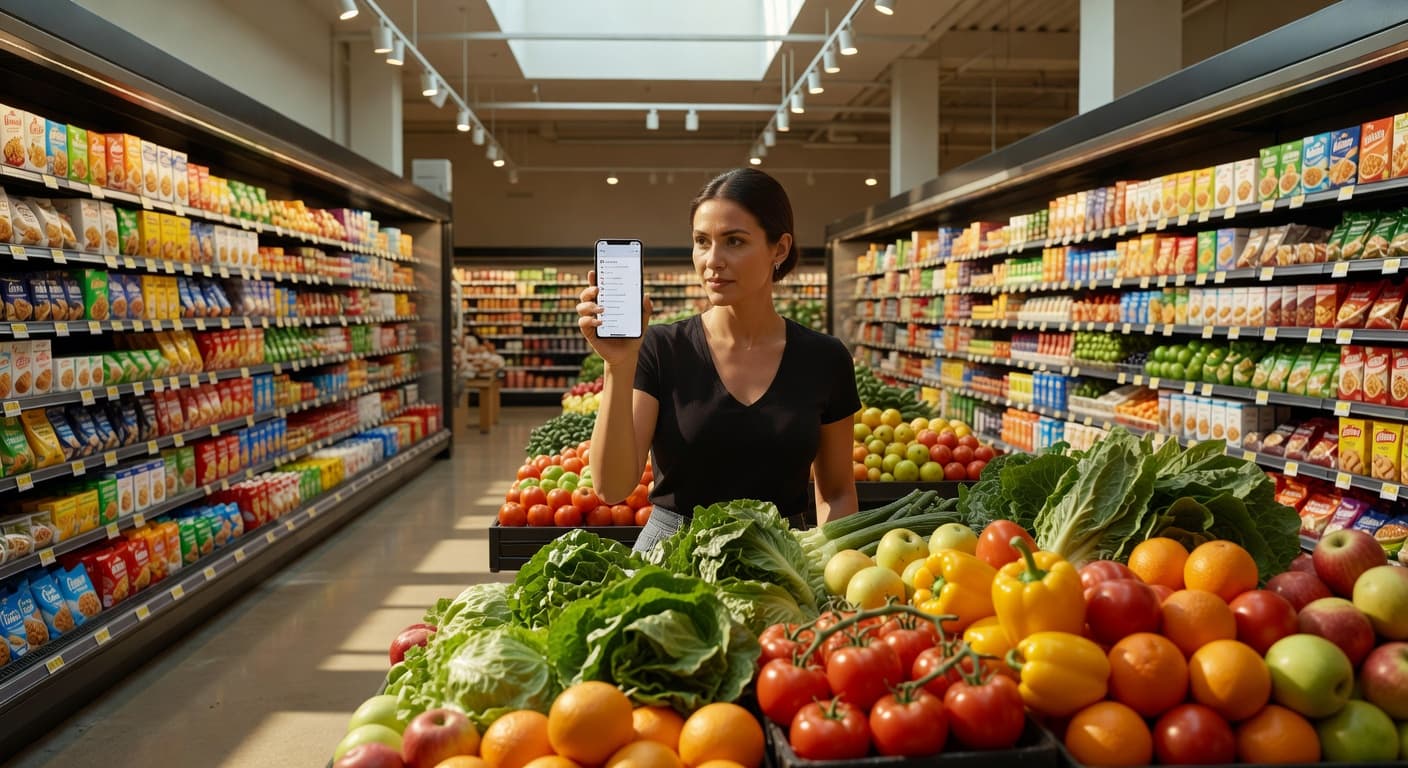
Most people do not go to the grocery store planning to buy chips, soda, or a family-size bag of cookies. They end up with those things anyway. Research shows that roughly half of all grocery purchases are unplanned — items grabbed off the shelf on impulse, triggered by displays, smells, or just walking past the wrong aisle at the wrong moment.
A grocery list fixes this. It sounds almost too simple. But the evidence behind it is real.
## What the Research Says
A 2015 study published in the *Journal of the Academy of Nutrition and Dietetics* found that people who planned their meals ahead of time had better diet quality, ate more variety, and were significantly less likely to be obese. Planning ahead means knowing what you need before you walk in. That means a list.
A study in the *International Journal of Behavioral Nutrition and Physical Activity* (Ducrot et al., 2017) found that meal planning was associated with a healthier diet, more food variety, and lower rates of overweight. People who planned were not on stricter diets — they just made decisions before they got to the store, when they were calm and not surrounded by marketing.
Being hungry in the store makes things worse. A 2013 study in *JAMA Internal Medicine* found that people who shopped hungry bought significantly more high-calorie foods and spent more money than those who shopped after eating. A list helps guard against this too — you stick to what you wrote down instead of what looks good in the moment.
## Why In-Store Impulse Buys Tend to Be Unhealthy
Grocery stores are designed to encourage unplanned purchases. End-cap displays, checkout lane snacks, oversized carts, and strategic product placement are all tools retailers use to get you to buy more. The items in those prime spots are almost never fresh produce or lean protein. They are high-margin, high-calorie packaged foods.
A Cornell University study found that the average shopper picks up about 59% of items without planning to. Not all of those are bad — but many are. When you rely on willpower in the store instead of a plan made at home, the environment wins more often than you do.
## Online Grocery Shopping Takes This Even Further
Online grocery ordering removes almost all of those triggers. No end caps. No smell of fresh-baked bread pulling you toward the bakery. No impulse candy at the register. You shop from a list, you see a running total, and you check out.
A 2021 study in *Appetite* found that online grocery shoppers made fewer impulse purchases and tended to choose healthier items compared to in-store shoppers. They also spent less overall. A separate analysis published in *Public Health Nutrition* found that online shopping was associated with purchasing more fruits and vegetables, likely because shoppers could search directly for what they needed without navigating past temptation.
Curbside pickup and home delivery add a time benefit too. The average grocery trip takes about 41 minutes, not counting drive time. Online ordering often takes 10–15 minutes from a familiar list.
## The Money Side
Impulse purchases add up fast. Studies estimate that unplanned grocery items account for anywhere from $20 to $50 per trip for the average household — or $1,000 to $2,600 per year. That is real money going to food you did not plan to eat and likely did not need.
Food waste compounds the problem. Americans throw away an estimated 30–40% of the food they buy, according to the USDA. Buying food without a meal plan means buying things you do not use. A list tied to an actual meal plan eliminates most of that waste.
## The Simplest Version
You do not need an app or a system. You need a plan for what you are going to eat this week and a list of what you need to make it happen. That is it.
Write the list before you go. Stick to it. Or order online and skip the store entirely.
MyNutriCart builds your grocery list for you — organized by store section, matched to your meal plan, and sized to what you actually need. No guessing. No wandering the aisles. Just what you came for.
References: Ducrot P et al., Int J Behav Nutr Phys Act 2017 (meal planning and diet quality); Tal A & Wansink B, JAMA Intern Med 2013 (hunger and grocery purchases); Dubé L et al., JNEB 2011 (grocery lists and healthy eating); Kollannoor-Samuel G et al., J Acad Nutr Diet 2015 (meal planning and obesity); USDA ERS (food waste estimates); Huyghe E et al., Appetite 2021 (online vs in-store impulse buying).